


Can magnesium cream help with pain?
Some people report feeling better after using topical magnesium, and small studies have reported improvements in fibromyalgia symptoms and certain nerve-pain symptoms. The findings are encouraging but preliminary: they do not yet establish magnesium cream as an effective pain treatment.
If you have found a topical product helpful, that experience deserves to be heard. You should also be able to find a clear explanation of the research without being promised a cure or told your experience does not count.
Kaia Relief makes a magnesium body cream. Here is what the published research tells us, where the questions remain, and how to approach topical products thoughtfully.
The study in women with fibromyalgia
One of the most relevant studies was conducted by researchers at Mayo Clinic and published in 2015.
Forty women with fibromyalgia enrolled in a four-week study of a magnesium chloride spray applied to their arms and legs. Researchers used questionnaires to track symptoms and the condition's impact on daily life. Twenty-four women completed the study.
Scores on the Revised Fibromyalgia Impact Questionnaire improved at two and four weeks. This measures overall symptom impact, not pain alone.
The important limitation: there was no placebo or untreated comparison group, and 16 participants did not complete the study. The results give researchers a reason to investigate further, but cannot show how much of the change was caused by magnesium.
This was a study of a spray, not a cream, and it did not test Kaia Relief's product.
Other pain research adds to the picture
A second pilot study reported improvements in nerve symptoms
A 2023 Australian study enrolled 20 people with advanced kidney disease and peripheral neuropathy, which can cause pain, tingling and other nerve symptoms. Participants applied a magnesium chloride spray daily for 12 weeks; 14 completed follow-up.
Researchers reported improvements in neuropathy symptom scores at eight and twelve weeks. Blood magnesium levels did not change significantly.
There was no placebo group, and the findings concern a specific medical population. Anyone with kidney disease should discuss magnesium products with their clinician before use.
A controlled study found no benefit for exercise soreness
The evidence is not uniformly positive. In a 2025 randomized, double-blind study, 35 active adults used a magnesium gel or placebo gel around a downhill-running session designed to produce muscle soreness.
The magnesium gel did not outperform placebo for soreness or the other recovery measures studied.
What about the women who say it helps?
Their experiences matter. Pain is something people feel, and patient-reported outcomes are a legitimate part of clinical research. Both positive pilot studies above used symptom questionnaires.
“I felt better after using this” is a meaningful personal report. A controlled trial asks a further question: did the ingredient cause the improvement?
Touch, other ingredients, expectations, other treatments and changes in symptoms can all contribute. Women deserve to be heard while researchers work out which factors matter.
Does magnesium get through the skin?
Magnesium supports normal muscle and nerve function, as explained by the NIH Office of Dietary Supplements. Whether a topical product delivers enough magnesium through the skin to change pain is a separate question.
A 2017 placebo-controlled pilot study enrolled 25 people and tested a magnesium cream for two weeks. The overall blood-magnesium increase in the magnesium group was not statistically significant; a signal appeared in a subgroup of non-athletes. The study measured magnesium levels, not pain relief.
A review published that year concluded that the evidence was insufficient to recommend transdermal magnesium.
Can these findings tell us anything about period cramps?
The studies above concern different pain conditions; they did not demonstrate relief from uterine cramps.
If cramps are what brought you here, you still deserve practical options. NHS guidance on period pain includes warmth, gentle movement and suitable pain-relief medicines. Our guide to heat for period cramps explains the choices and precautions.
If you choose to use a topical magnesium product
Read the full formula and follow its own directions. The amount used in a research study is not a dosing instruction for a different cream or spray.
- Test a small area first, especially if your skin is sensitive.
- Avoid broken, irritated or freshly shaved skin.
- Stop if it burns, stings persistently or causes a rash. Tingling is not evidence that the product is working.
- Avoid eyes and other sensitive areas.
- Do not add a heating pad or heat wrap over a topical product unless its directions explicitly allow that combination.
Fragrance and botanical oils matter, too. NCCIH notes that lavender can cause allergic skin reactions in some people. Review all ingredients, not only the magnesium.
Ask your clinician before use if you are pregnant, breastfeeding, have kidney disease or are treating an ongoing medical condition. Seek medical care for new, severe or worsening pain.
Where Kaia Relief's Magnesium Body Cream fits
For readers who choose a cream format, Kaia Relief's Magnesium Body Cream combines magnesium chloride with coconut oil, shea butter and a botanical blend including lavender, chamomile and turmeric. Its rich texture leaves skin moisturized and makes it easy to work into your body-care routine.
Use a small amount on clean, intact skin as directed on the label. It contains lavender and chamomile oils, so check the ingredient list if you are sensitive to botanical fragrances.
These studies tested other formulations, not Kaia Relief's cream, and do not substantiate a treatment claim for this product.
Frequently asked questions
Is magnesium cream clinically proven for pain?
The clinical evidence is limited and mixed. Two small uncontrolled studies reported symptom improvements with sprays; a placebo-controlled exercise study found no benefit from the gel tested. Those findings do not establish a general pain-relief benefit for creams.
If it helps me, does that count?
It counts as your experience and is useful to discuss with your clinician. It does not tell us which ingredient or part of the routine caused the improvement, or predict another person's result.
Is a spray better than a cream?
The positive pilot studies tested sprays, but they did not compare sprays with creams. Choose according to the full formula, skin tolerance and directions rather than assuming that one format works better.
Can I replace my pain medication with magnesium cream?
Do not stop or replace a prescribed treatment on the basis of these studies. Discuss changes with your clinician.
Related reading
References
- Engen DJ, et al. Effects of transdermal magnesium chloride on quality of life for patients with fibromyalgia: a feasibility study. Journal of Integrative Medicine. 2015;13(5):306–313. Study record.
- Athavale A, et al. Transdermal Magnesium for the Treatment of Peripheral Neuropathy in Chronic Kidney Disease: A Single-Arm, Open-Label Pilot Study. Journal of Palliative Medicine. 2023;26(12):1654–1661. Study record.
- Coates AM, et al. No Effect of Topical Application of a Commercial Magnesium Gel on Exercise Recovery in Active Individuals. International Journal of Sport Nutrition and Exercise Metabolism. 2025;35(5):416–423. Study record.
- Kass L, et al. Effect of transdermal magnesium cream on serum and urinary magnesium levels in humans: A pilot study. PLOS ONE. 2017;12(4). Paper.
- Gröber U, et al. Myth or Reality: Transdermal Magnesium? Nutrients. 2017;9(8):813. Review.
- NIH Office of Dietary Supplements. Magnesium.
- NCCIH. Lavender.
- NHS. Period pain.
This article provides general information and does not replace individual medical advice.
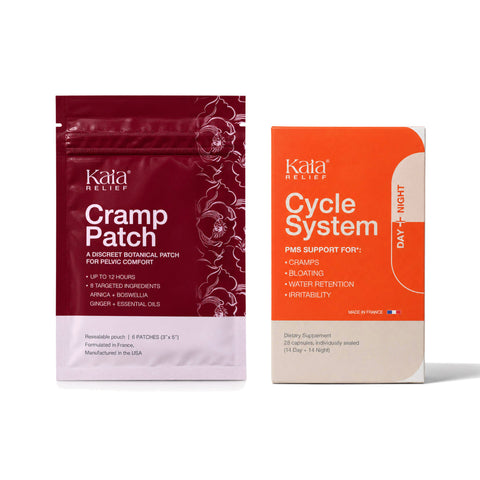
Looking for support?
*These statements have not been evaluated by the Food and Drug Administration. These products are not intended to diagnose, treat, cure, or prevent any disease. Dietary supplements. Not a substitute for a healthy diet and lifestyle. Consult your healthcare provider before use if you are pregnant, nursing, taking medication, or have a medical condition.
Where this page cites research on individual ingredients, that research is not a claim about Kaia Relief products. Individual results may vary.


