


What helps with trouble sleeping before your period?
If sleep gets harder before your period, start with a steady wake time, a cool and dark bedroom, less late-day caffeine and a routine that gives you time to unwind. Menstrual-cycle changes can contribute, but recurring or severe sleep problems deserve assessment rather than being dismissed as something you have to accept.
You might feel exhausted all evening and then wide awake in bed. Or fall asleep easily, only to wake during the night feeling hot, uncomfortable or unable to switch off.
The short answer
- Keep a regular wake time, including after a difficult night.
- Adjust your room and bedding if you feel warmer before your period.
- Move caffeine earlier and avoid using alcohol as a sleep aid.
- Try a comfortably warm bath or shower one to two hours before bed.
- Address symptoms that keep you awake, including cramps.
- Track sleep and cycle symptoms together.
- Seek help when sleep loss or mood symptoms interfere with your life.
Why sleep may change before your period
Hormone changes can play a part
The phase after ovulation and before the next period is called the luteal phase. Estrogen and progesterone change during this phase, and those shifts can influence sleep-related physiology.
A 2023 review by Alzueta and Baker describes differences between people's experiences: some report worse premenstrual sleep even when laboratory measures show little change. There is no single hormone explanation that fits everyone.
You may feel warmer
Body temperature tends to be slightly higher after ovulation, with a smaller overnight temperature decline. That may make a room or duvet that usually feels comfortable seem too warm.
Other symptoms may interrupt sleep
Cramps, breast tenderness, bloating, anxiety or irritability can make settling down harder. Consider which symptom is actually waking you rather than treating all premenstrual sleep disruption as the same problem.
A practical plan for the premenstrual week
Keep the wake time steady
Keep a realistic wake time most days, including weekends. The NHLBI recommends consistent sleep and wake times.
Give yourself an adequate opportunity to sleep, but avoid turning an earlier bedtime into hours of frustrated wakefulness. Go to bed when sleepy rather than trying to force sleep because tomorrow is busy.
Make the room comfortable for the night you are having
Keep your room dark, quiet and comfortably cool. There is no single thermostat setting everyone needs to reach.
If you wake warm, try one adjustment at a time: a lighter duvet, breathable nightwear or a fan if appropriate. Keep an extra layer nearby if your temperature comfort changes during the night.
Try a warm bath or shower earlier in the evening
A 2019 review linked warm bathing one to two hours before bed with better sleep outcomes, including faster sleep onset. Some sessions were as short as ten minutes. The research was limited and not specific to premenstrual sleep.
Choose comfortably warm water rather than trying to reach the hottest temperature studied. If bathing leaves you overheated or uncomfortable, adjust or skip it.
Get outside during the day and reduce bright light late
Get outside during the day when you can. Turn down bright lighting and stimulating screen activity before bed, in line with NHLBI sleep guidance.
Look at caffeine timing
Caffeine can remain active for hours. An afternoon coffee may be worth moving earlier if you are struggling to fall asleep.
Avoid using alcohol to make yourself sleepy. It can make sleep lighter and more fragmented, even if falling asleep initially feels easier, according to NHLBI guidance on insomnia.
Keep moving, and notice how evening exercise affects you
Regular daytime activity is part of standard sleep advice. If an intense late workout leaves you feeling alert in bed, try moving it earlier or choosing gentler movement in the evening.
Make winding down simple
Choose something you enjoy enough to repeat: reading, quiet music, a few minutes of slow breathing or a gentle body-care routine.
If cramps are keeping you awake, address the pain
The NHS lists warmth, gentle movement and suitable pain-relief medicines among options for period pain. Use medicines only as labeled or as your clinician advises.
You can use a heating pad while awake, then remove it before sleeping. See our guide to using heat for period cramps for options and precautions.
Track sleep and symptoms together
Track sleep and symptoms daily for at least two cycles, including the days when you feel well. Note:
- When bleeding starts.
- When you go to bed and get up.
- Whether the main difficulty is falling asleep, waking or waking too early.
- Cramps, heat discomfort and mood symptoms.
- Caffeine timing, medicines or supplements.
- How you feel during the day.
The NHLBI recommends a sleep diary to help clinicians understand sleep problems. Adding cycle dates can make your own recurring pattern easier to discuss.
Do not delay an appointment just to finish tracking. Bring the information you have, especially if symptoms are severe.
Is it PMS, PMDD or something else?
Sleep difficulty can occur with premenstrual symptoms. More severe mood changes may warrant assessment for premenstrual dysphoric disorder, or PMDD.
The Office on Women's Health describes PMDD as a serious condition involving symptoms such as marked irritability, depression or anxiety before a period. Trouble sleeping can be one part of that picture.
PMDD is treatable: established options include certain antidepressants and hormonal treatments. Assessment usually includes daily symptom ratings over at least two menstrual cycles. You can book an appointment before tracking is complete.
Other contributors deserve attention, too:
- Heavy periods can lead to iron deficiency. If you have an urge to move your legs at rest, especially at night, ask about restless legs and whether iron testing is appropriate. Do not start high-dose iron without assessment. NHLBI information.
- If sleep has recently changed in your 40s, especially with irregular periods or night sweats, discuss perimenopause.
- Pain, anxiety, thyroid conditions, medicines and sleep apnea can also affect sleep. NHS information.
What about supplements?
Research on oral magnesium and sleep is limited and mixed, according to NCCIH. For adults, the NIH upper limit is 350 mg daily from supplements and medicines, unless a clinician advises otherwise; magnesium naturally present in food is excluded. Oral magnesium can interfere with certain antibiotics and osteoporosis drugs, so ask a pharmacist about timing.
Before adding a supplement, have a clinician or pharmacist review the full formula if you take medicines, have kidney disease, are breastfeeding or are trying to conceive. Early pregnancy can begin before a missed period.
Check with a pharmacist before combining a formula containing passionflower or lemon balm with alcohol, sleep medicines, benzodiazepines or sedating antihistamines. Passionflower may increase the sedative effects of some medicines. Safety information.
Where Kaia Relief's Cycle System fits
Kaia Relief's Cycle System brings separate Day + Night capsule formulas into one PMS routine, formulated and manufactured in France with French pharmacy expertise. The Night formula contains lemon balm, passionflower, yarrow and magnesium.
Explore Cycle System's ingredients and directions.
Use only as directed on the current package. Do not use during pregnancy: the formula contains passionflower, which NCCIH advises against during pregnancy. If you are trying to conceive or breastfeeding, have your clinician review the full formula before starting. Cycle System is not a treatment for insomnia or PMDD.
When to seek medical help
Talk to a clinician if sleep problems recur, affect your daytime functioning or happen throughout the month. You can seek help before symptoms meet a formal definition of chronic insomnia.
Also mention snoring, gasping, witnessed breathing pauses or significant daytime sleepiness. These can point to problems that a bedtime routine alone will not address.
For long-term insomnia, CBT-I is usually recommended as a first treatment. It can address patterns of wakefulness and anxiety around sleep through a structured plan.
Get urgent help if you have thoughts of harming yourself, feel unable to stay safe or develop severe mood symptoms. Contact local emergency services or go to the nearest emergency department if you are in immediate danger. In the US, you can also call or text 988 to reach the 988 Suicide & Crisis Lifeline, available 24 hours a day. Do not wait for your period to start before seeking help.
Frequently asked questions
Why do I struggle to sleep a week before my period?
Cycle-related changes may contribute, including changes in temperature and other premenstrual symptoms. They are not the only possible cause. Track the pattern and seek assessment if it is recurrent or disruptive.
Is waking at night before my period normal?
It can happen, but “common” does not mean you have to tolerate it. Consider what wakes you and whether the pattern affects your day, then discuss it with your clinician.
Can magnesium help me sleep before my period?
Evidence on oral magnesium and sleep is limited, and topical magnesium is not an established sleep aid. Do not assume either is the answer to a recurring cycle-related sleep problem.
Related reading
References
- Alzueta E, Baker FC. The Menstrual Cycle and Sleep. Sleep Medicine Clinics. 2023;18(4):399–413. Review.
- Haghayegh S, et al. Before-bedtime passive body heating by warm shower or bath to improve sleep: A systematic review and meta-analysis. Sleep Medicine Reviews. 2019;46:124–135. Paper.
- NHLBI. Healthy Sleep Habits.
- NHLBI. Insomnia Diagnosis and Insomnia Treatment.
- NHLBI. Sleep Apnea Symptoms.
- Office on Women's Health. Premenstrual dysphoric disorder.
- NHS. Insomnia and Period pain.
- NCCIH. Sleep Disorders and Complementary Health Approaches.
- NIH Office of Dietary Supplements. Magnesium.
- NCCIH. Passionflower.
- Memorial Sloan Kettering Cancer Center. Passionflower.
- IAPMD. PMDD and symptom tracking.
- NHLBI. Iron-deficiency anemia.
- NHS. Perimenopause symptoms.
This article provides general information and does not replace individual medical advice.
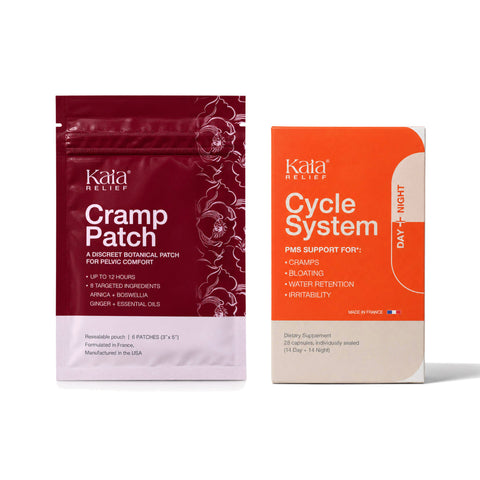
Looking for support?
*These statements have not been evaluated by the Food and Drug Administration. These products are not intended to diagnose, treat, cure, or prevent any disease. Dietary supplements. Not a substitute for a healthy diet and lifestyle. Consult your healthcare provider before use if you are pregnant, nursing, taking medication, or have a medical condition.
Where this page cites research on individual ingredients, that research is not a claim about Kaia Relief products. Individual results may vary.


